
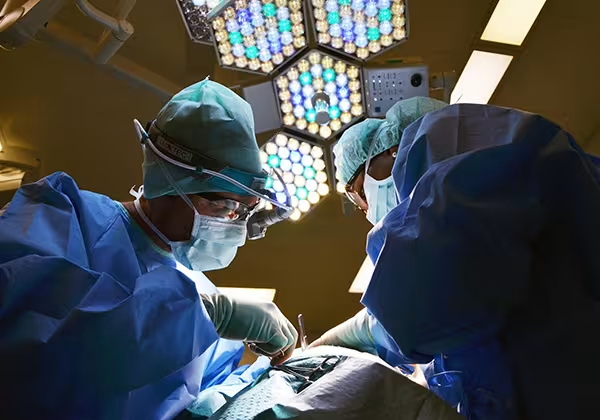
Frye Regional Medical Center, in partnership with the Duke Heart Network, launched a local transcatheter aortic valve replacement (TAVR) program to enhance cardiovascular care and reduce patient travel. Despite pandemic challenges, the program successfully performed its first procedure in June 2024, achieving excellent clinical outcomes and serving 60 patients in its inaugural year.
Goal
Anchored by a 355-bed acute care hospital, Frye Regional Medical Center serves more than 300,000 residents of the Catawba Valley region of western North Carolina. Frye Regional has a longstanding reputation of providing cardiovascular care; including open heart surgery. As technological advances have become more prevalent in the field of cardiology, patients requiring the newest catheter-based heart valve procedures were traveling at least an hour to seek care at larger tertiary care centers. Building a new, local cardiovascular service line offering became a key strategic initiative for the physicians and executive team at Frye Regional.
As a Duke Health affiliate in heart, Frye Regional partnered with the Duke Heart Network to develop a structural heart program that would offer transcatheter aortic valve replacement (TAVR) as the initial service offering.
“Bringing a service like this to our community is challenging,” says interventional cardiologist John Morrison, MD, Frye Regional Medical Center. “The ability to offer our patients this procedure without them having to go out of town is immensely valuable.”
Solution
The Duke Heart Network began with a comprehensive site assessment, meeting with clinical and executive leadership to understand their objectives and evaluate strengths and challenges facing the launch of a new structural heart program. This onsite visit included Duke Heart Center clinical experts and identified needs in imaging, OR construction, provider and team training, and incremental staff requirements. The Duke Heart Network then worked collaboratively with key stakeholders to create the project timeline.
Despite many pandemic related delays, the Duke Heart Network served as project managers, overseeing the project charter and organizing each phase of program development. The Duke Heart Center welcomed Frye Regional staff and providers for clinical shadowing experiences that provided the education and mentorship required to develop their own program at Frye Regional.
Jessica Prevette, FNP, TAVR Coordinator for Frye Regional Medical Center, says “The Duke Heart Network’s ability to assess where we were, identify opportunities and then provide tools and feedback was key to a successful launch. We had a good first day because there was a ton of preparation on our part with Duke’s help and leadership.” Prevette said the connections she made while working with Duke helped her not only develop her new role, but establish protocols and standardization for the new program.
Through our partnership, the Duke Heart Team was able to provide experiential leadership in avoiding common pitfalls of a new TAVR program. “I think one of the most underrated tools Duke offers is their willingness to gently apply the brakes,” says Brett Starr, MD, Chief, Division of Cardiovascular and Thoracic Surgery, Frye Regional Medical Center. “What I mean by that is we wanted to push forward…Duke identified areas where we needed to pause to ensure a successful launch.” Dr. Morrison agreed, “…Duke’s program development approach allowed us to sit back and look at things more objectively before moving forward and this was extraordinarily helpful. The last thing you want to do is start a program that fails.”
“The most valuable service the Duke Heart Network provided was to allow the Frye providers to focus on being clinicians,” says Lisa Kotyra, ACNP, Senior Director of the Duke Heart Network. “Frye strategically prioritized the TAVR program development. We took on the work of project management: organization, scheduling, facilitation, and multidisciplinary team training. The Frye providers were able to continue caring for cardiac patients and still establish a needed service for patients and the community.”
Outcome
The Ambulatory Valve Clinic was launched in 2023 at Frye Regional Medical Center. And with this, Frye Regional performed the first TAVR procedure in June 2024 and to date is nearing 40 catheter based TAVR procedures. The clinical outcomes are excellent and the community is grateful for this service being added to the cardiovascular care already being offered at Frye Regional.